Some mosquito species, such as Aedes aegypti, have been able to weave their way through evolutionary time despite having no ecological value, basically being just delivery mechanisms for things like Dengue fever, the most common vector-borne disease in the world.
We could wipe them out and the rest of the ecosystem would be just fine but environmentalists have promoted a lot of fear about science-based mitigation approaches, like a male mosquito rendered sterile, and they hate pesticides more than they love poor people, so that leaves...clothes?
Maybe. In a study, disease-free mosquitoes got to bite willing subjects who gave them bare skin, skin covered in cheesecloth, or graphene oxide covered in cheesecloth. Bare skin was the worst, as we have known since recorded history began, while graphene did the best. But though mosquitoes could not generate enough force to get through the film their lack of interest wasn't just because of the physical barrier.
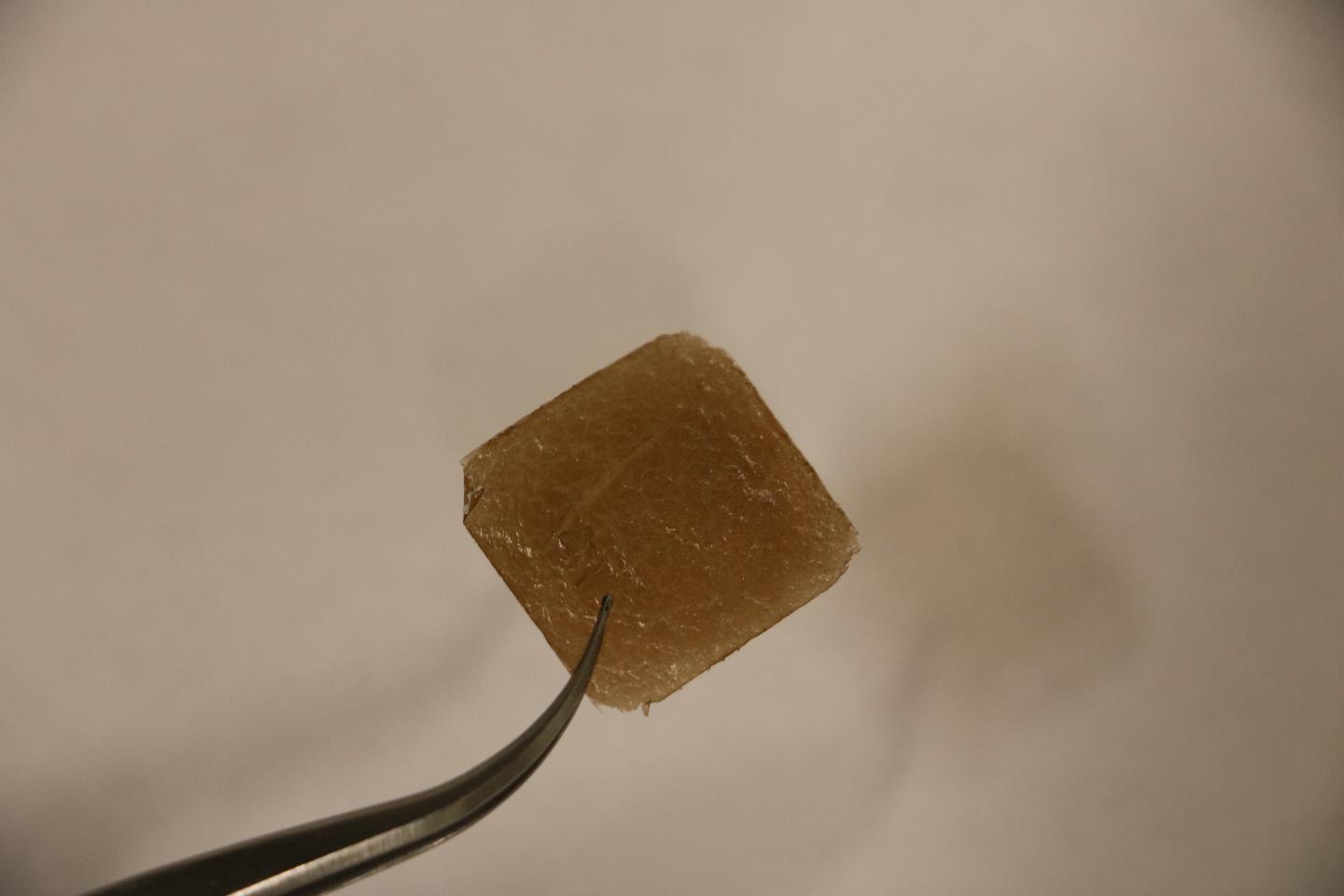
Credit: Hurt Lab / Brown University
There seems to be a chemical aspect as well. When researchers dabbed sweat on the outside of the graphene oxide barrier the critters tried to attack just like they did bare skin.
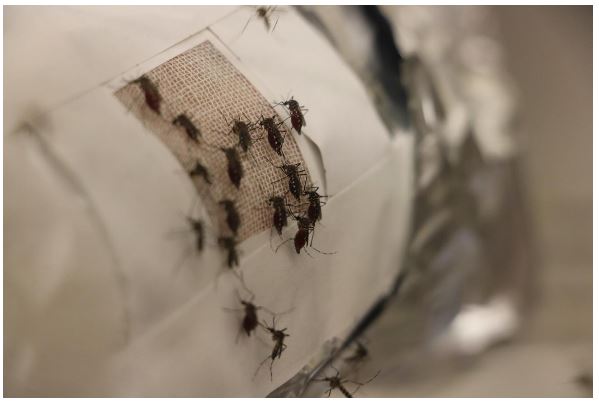
Credit: Hurt Lab / Brown University
There are still limitations that will need to be fixed. Their graphene oxide films only work while dry, when they are wet mosquitoes can poke through, and keeping dry all of the time is not realistic in countries where dengue and other tropical diseases are common. Reduced oxygen content
graphene oxide
(rGO) works while wet or dry but does not breathe very well, which means more discomfort for wearers.
Citation: Cintia J. Castilho, Dong Li, Muchun Liu, Yue Liu, Huajian Gao, and Robert H. Hurt, 'Mosquito bite prevention through graphene barrier layers', Proc Natl Acad Sci August 26, 2019. DOI:10.1073/pnas.1906612116