READ MORE
First Nation Shell Middens...
Does Learning A Foreign Language Stimulate Cerebral...
The Thorny Problem Of COVID-19 Vaccines And Spike...
By W. Glen Pyle
Life Sciences Can’t Afford Fragmented Data And...
A Million-Year-Old Mammoth May Hold The Key To...
By Irena Šoljić

More than 60 percent of the world's population is infected with a type of herpes virus called human cytomegalovirus, which replicates by commandeering the host cell's metabolism, but the details of this maneuver have been unclear.
Researchers have discovered that cytomegalovirus manipulates a process called fatty>

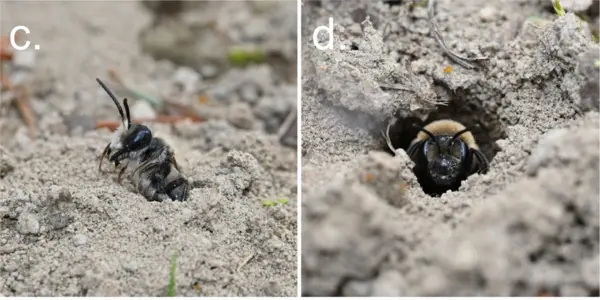
Bees have the reputation of being incredibly organized and spending their days making sure our food ecosystem is functioning. Neither is accurate. Unless you are an almond farmer in California and rented bees that were delivered in giant trucks, they have no impact on your food, and they are also not working non-stop>

Remember when a small bacterium from California’s Mono Lake was supposed to rewrite the very definition of life? Headlines screamed: NASA finds “alien” life on Earth! The organism reportedly swapped out precious phosphorus - one of life’s six essential building blocks - for arsenic, the toxic villain in murder>

Dolphins and seals have had eons to adapt to aquatic life, but they can still be taxed while pushing the boundaries, according to a paper in Nature Communications which found a surprisingly high frequency of heart arrhythmias in bottlenose dolphins and Weddell seals - at least during their deepest dives. >

There is a saying that when all you have is a hammer, everything looks like a nail.
So, it should come as no surprise that vaccine skeptics worldwide are sounding the alarm about the flu shot as a real danger in the COVID-19 pandemic.
Confused? Well, it turns out the anti-vaccine activists are too.
In the>

Psychologists at Harvard University using neuroimaging say they have resolved the century-old debate over the existence of Extra-Sensory Perception(ESP) - and it doesn't exist.
The research was led by Samuel Moulton, a graduate student in the department of psychology in the Faculty of Arts and Sciences at Harvard>