A new analysis highlights a concerned trend among those with extreme obesity; though obesity is currently the third greatest lifestyle killer, behind only cigarettes and alcohol, the analysis of 11.6 million surgical cases from the American College of Surgeons National Surgical Quality Improvement Program (NSQIP) between 2005 and 2022 found that people with the highest levels of obesity are undergoing fewer surgical procedures overall. These procedures include common operations like knee or hip replacement, hernia surgery, and surgery of the breast, prostate and colon
Since it is known that obesity is associated with increased risks for a number of conditions, including many that can be treated by surgical intervention, it's important to identify the mechanisms underlying the lack of uptake among higher BMI populations.
They adjusted for demographics, health status and comorbidities to evaluate surgical trends across BMI categories. Results showed that the higher the BMI category, the greater the decline in operative representation over time and found that barriers to care included fewer diagnoses and preventive care before surgery is needed and reduced eligibility under the Affordable Care Act.
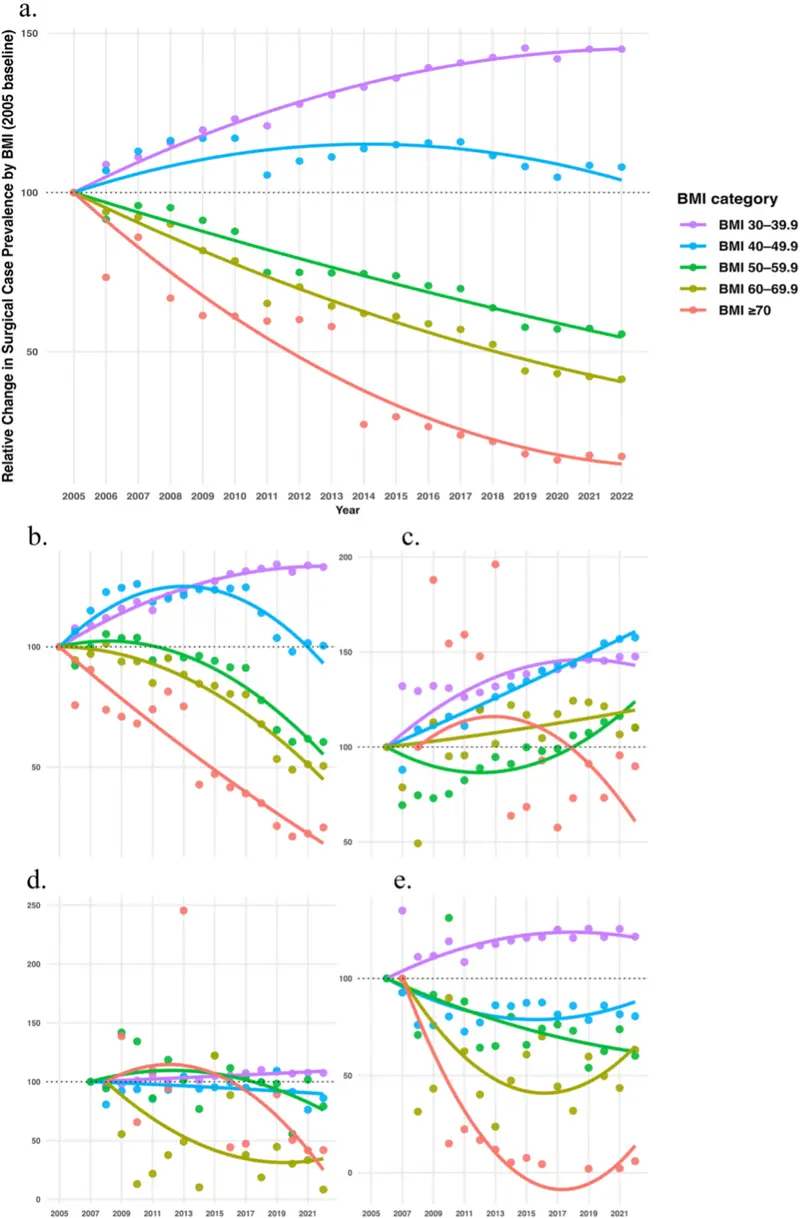
Relative change in surgical case prevalence stratified by BMI, 2005–2022. Curves show the relative change in surgical case prevalence using 2005 as the baseline annual prevalence (y-axis) over time (x-axis) stratified by BMI category (defined in the legend by color) for either (a) total cases or (b–e) subspecialty cases. Regression trend lines are weighted quadratic least-squares fits for each BMI category. Subspecialty cases include: (b) general surgery, (c) gynecology, (d) cardiac surgery, and (e) thoracic surgery.
“This study reveals a concerning disconnect between the growing prevalence of severe obesity and access to surgical care for a variety of common operations,” said senior author Dr. Vance Albaugh of Pennington Biomedical and the Metamor Institute in their statement. “Individuals at the highest BMI levels carry the greatest burden of obesity-related disease, yet they appear to be receiving proportionally fewer surgical interventions each year.”
Their concern is that reduced access to surgical intervention could lead to wotse health outcomes and more advanced disease presentation among patients with severe obesity - so government health care may be saving money in the short term but it could be creating an order of magnitude in higher costs for the future.
The study also examined trends across surgical specialties, including general surgery, gynecology, cardiac surgery and thoracic surgery. Declines in surgical representation among higher BMI groups were most pronounced in general surgery and abdominal procedures.
Citation: M. Kachmar, F. Corpodean, H. J. Garcia Navas, et al., “Increasing Obesity Severity Is Associated With Less Surgical Care in the United States,” Obesity (2026): 1–8, https://onlinelibrary.wiley.com/doi/10.1002/oby.70240