Friends of the Earth and other litigation groups opposed to science are cheering the closure of AquaBounty's AquAdvantage salmon - the poster-child (decades of regulatory roadblocks) for how the US regulatory system is manipulated by lawyers to hold back technology and medicine - but progress marches on despite the public relations campaign by Greenpeace, NRDC, and others who stand against it.
Their persistent efforts to get pesticides either banned or regulated so tightly they act as bans have been wildly successful during the Biden years, but with Chevron Deference overturned at the Supreme Court political appointees can no longer get science banned by using agencies to create regulations that act like laws.
Their jobs may soon get harder. It is known in the science community that copper sulfate - listed as "certified organic" by the lobbyists and corporate marketing honchos who are on the National Organic Standard Board - is actually more toxic and requires far more product than newer chemicals. It is why organic food buyers have higher levels of toxic compounds in their bodies. Whole Foods has a history of lying to the public about whether its products use pesticides at all, much less how toxic they are to wildlife, but a new program developing nanopesticides may create what Big Organic only claims to have. A targeted way to use organic-certified pesticides.
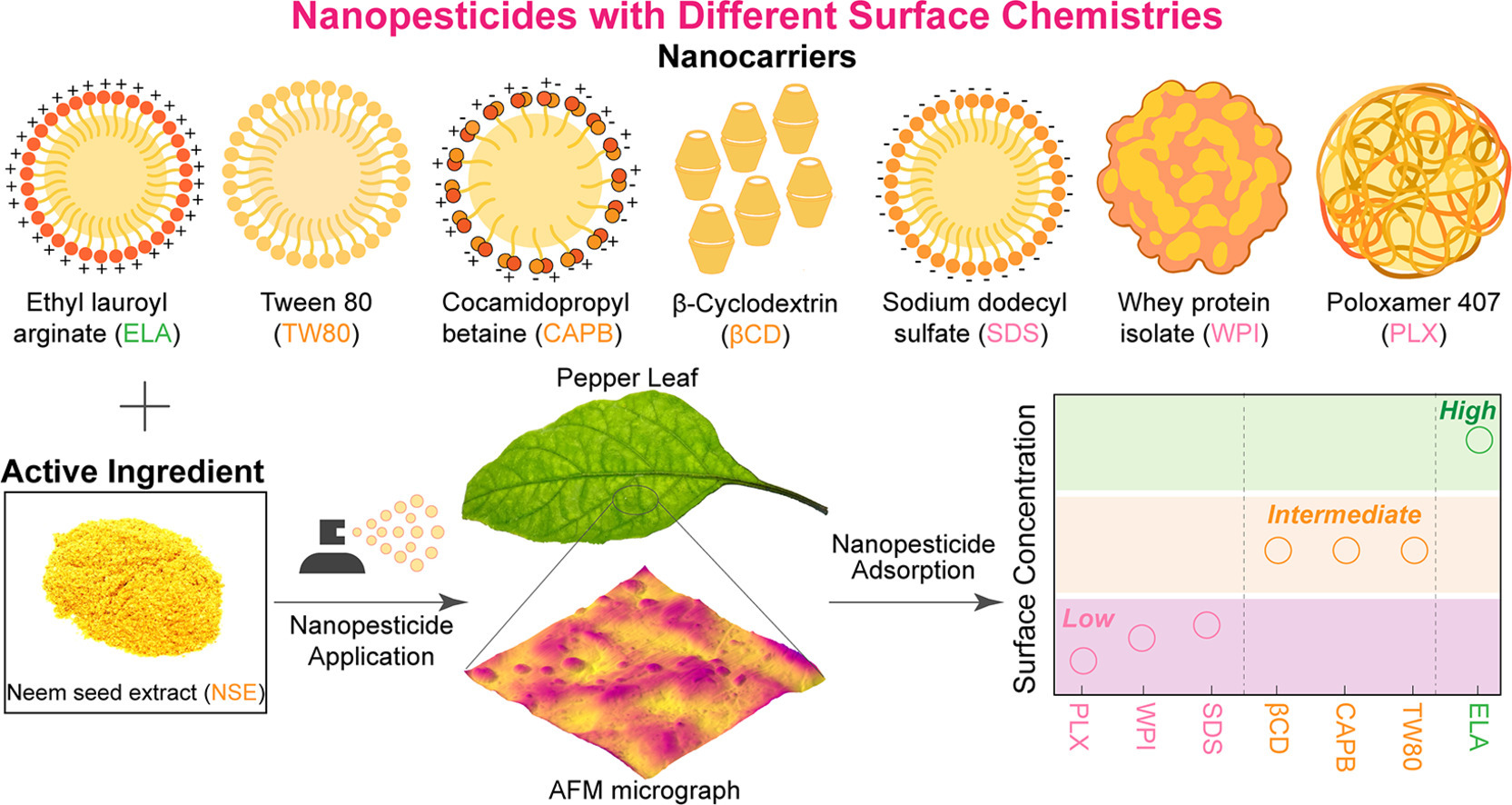
Credit: 10.1016/j.surfin.2024.105190
The current standard for a targeted product that reduces the exposure of mass spraying is neonicotinoid products. They are seed treatments and protect plants when they are most vulnerable while remaining harmless to bees or wildlife that will come along later. They are one reason why there are more bees than ever.
The next step could be improving how pesticides stick to plant surfaces, by further optimizing the delivery system. Using pepper leaves as a proxy, Arcot et al. found a way to send Neem - certified organic - inside nanopesticides. Their method could eliminate the 80-90% of sprayed pesticides that are completely wasted by organic farmers because they do no good, without jeopardizing the food supply of 30% of cereals, 50% of vegetables, and 80% of fruits lost if no pesticides at all are used.
If aqueous cationic and zwitterionic nanocarriers can effectively deliver Neem and reduce pesticide usage overall, why would environmentalists object? For the same reason they spend tens of millions of dollars to block Golden Rice, which is a public domain product created to get around objections about "corporate control" of food - it is not about people, it is about their war of extinction against science.