The ocean has quietly protected us from the full force of climate change. Since the industrial revolution, it has absorbed a vast amount of the carbon dioxide released by human activity. That has helped slow the rise of CO₂ in the atmosphere, but it has also created a serious problem below the surface.
When carbon dioxide dissolves in seawater, it reacts with water to form carbonic acid and related dissolved carbon species. Over time, this process lowers the pH of the ocean, making it more acidic. For marine life, especially organisms that build shells and skeletons from calcium carbonate, this change can be devastating. Coral reefs, shellfish, plankton and many other species depend on a delicate chemical balance in seawater. As that balance shifts, entire ecosystems are placed under stress.
This is where electrochemistry may offer a powerful new tool.
Researchers are exploring a method known as ocean alkalinity enhancement, or OAE. The basic idea is to restore some of the ocean’s natural alkalinity, allowing seawater to neutralize excess acidity and absorb more CO₂ from the atmosphere. In simple terms, if ocean acidification is one side effect of carbon pollution, then carefully increasing alkalinity could help push the system back toward balance.
One proposed approach is to add alkaline minerals, such as finely ground rock, directly into the ocean. This mimics natural geological weathering, the slow process by which minerals from rocks dissolve into water and help regulate acidity. But nature works on long timescales, and climate change is moving much faster. To make a meaningful impact, enormous quantities of alkaline material would have to be mined, processed, transported and distributed.
An alternative is emerging from the laboratory: electrochemical ocean alkalinity enhancement.
Instead of adding large quantities of minerals, an electrochemical system can directly modify the chemistry of seawater. One promising technique uses bipolar membrane electrodialysis, often shortened to BMED. In this process, seawater passes through an electrochemical cell containing specialized membranes. When electricity is applied, ions are separated and acidity can be removed from the seawater stream. The treated water, now more alkaline, can be returned to the ocean, where it may help counter acidification and support additional CO₂ uptake.
At the heart of this idea is the electrochemical cell. In laboratory research, an electrochemical cell provides a controlled environment where chemical reactions are driven or measured using electrical energy. A typical three-electrode setup includes a working electrode, a reference electrode and a counter electrode. Each part plays a different role.
The working electrode is where the reaction of interest takes place. In carbon-removal and seawater-chemistry studies, this may involve reactions linked to ion transport, pH adjustment, oxygen evolution, hydrogen evolution or electrocatalytic conversion. The material and surface of the working electrode matter enormously. Platinum, gold, graphite, glassy carbon and other electrode materials all behave differently depending on the electrolyte, applied voltage and target reaction.
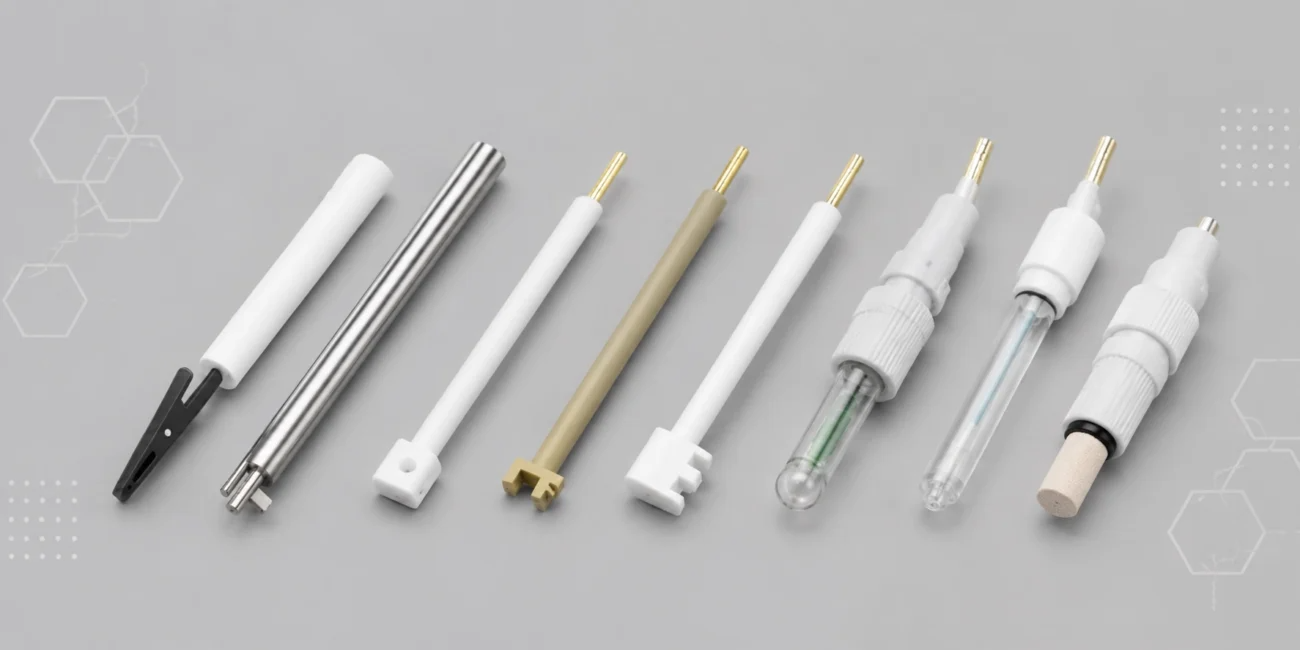
The reference electrode provides a stable potential against which the working electrode can be measured. Without a reliable reference electrode, researchers cannot accurately understand or reproduce the electrochemical conditions of an experiment. This is especially important when studying seawater, which is chemically complex and contains many dissolved salts, minerals and organic compounds.
The counter electrode completes the circuit, allowing current to flow through the electrochemical cell. Together, these components make it possible to study reactions with precision, repeatability and control.
Electrocatalysis is another important piece of the puzzle. An electrocatalyst is a material that helps an electrochemical reaction proceed more efficiently, often by lowering the energy required. In climate-related electrochemistry, electrocatalysis is central to research on CO₂ reduction, hydrogen production, oxygen evolution and other reactions that may support cleaner energy systems. For ocean alkalinity enhancement, efficient electrocatalytic processes could help reduce energy costs and improve the scalability of treatment systems.
That scalability is critical. A laboratory experiment might use a small sealed electrochemical cell with carefully positioned electrodes and controlled electrolyte volume. A real-world system would need to process vast amounts of seawater. This means researchers must solve difficult engineering problems: membrane durability, electrode stability, energy efficiency, flow design, corrosion resistance, pH control and long-term monitoring.
Laboratory research equipment therefore plays a major role in moving this technology forward. Sealed and unsealed electrochemical cells, quartz cells, H-type cells, corrosion-resistant PTFE cells, working electrodes, reference electrodes, salt bridges, Luggin capillaries and gas-management accessories all help researchers test how electrochemical systems behave under different conditions. Before any ocean-based technology can be deployed responsibly, it must be studied in controlled lab environments where variables can be isolated and measured.
There are also environmental questions. Adjusting seawater alkalinity is not something that can be done carelessly. Scientists must understand how treated water affects marine organisms, local ecosystems and carbon chemistry over time. They must also develop reliable methods to measure, report and verify how much acidity and CO₂ are actually removed. Without strong monitoring, ocean-based carbon removal could make claims that are difficult to prove.
Still, the promise is significant. Electrochemical approaches offer a modular path toward ocean de-acidification. They could potentially be integrated with existing coastal infrastructure such as desalination plants, seawater treatment facilities or industrial sites with access to clean electricity. If powered by renewable or other low-carbon energy, these systems could help address two problems at once: rising ocean acidity and excess atmospheric carbon dioxide.
The ocean has absorbed the consequences of human industry for more than a century. Electrochemistry may now help us return some balance to that system. From the working electrode inside a laboratory cell to large-scale seawater treatment modules, the path forward will depend on careful experimentation, better materials, durable membranes and responsible environmental testing.
The chemistry is complex, but the goal is simple: use electricity, precision and good science to help the ocean breathe again.