In the last 50 years, Canada's Long Point Bird Observatory has seen a decline of insects by over 60 percent and it took a U.S. university to sound the alarm.
The impact, the authors of a new paper believe, is smaller birds and less breeding success.
The birds they highlight are tree swallows, which feed on flying insects, which are in decline in built-up areas in Canada. And the authors invoke climate change as another factor. Because insects emerge at different times due to atmospheric issues, it won't coincide enough with bird breeding.
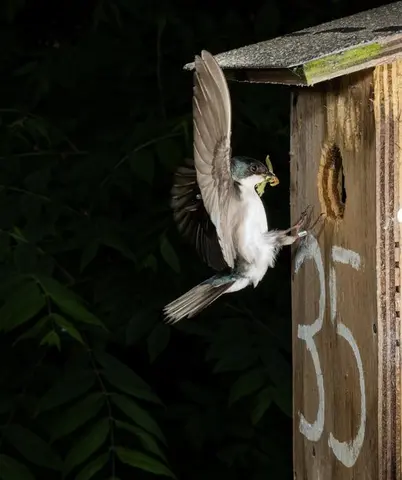
Tree swallows. Credit: Sherri and Brock Fenton
Eggs are energy intensive, as is caring for offspring. Less food could impact that. If there is phenological mismatch, that;s bad, At Long Point, peak insect abundance is usually in May, but when winters are warmer, insects emerging earlier and birds may not need the food. For a few winters, that is not a problem, cycles happen, but the authors worry climate change could permanently impact that before birds change their habits.
They estimate the overall that the mismatch between the timing of tree swallow breeding and peak insect emergence has increased by three days per decade since 1977 at Long Point. These are estimates and in one location, so a more thorough data set would require more funding, and the change doesn't seem to be climate change so far. They instead strangely blame neonicotinoid pesticides, despite those being targeted seed treatments and not broad spectrum sprays. Maybe they don't understand chemistry, though.